
Dual
German Turntable Engineering Since 1907
Dual's origins trace to 1907, when brothers Christian and Joseph Steidinger founded a precision mechanics workshop in St. Georgen, a small town in Germany's Black Forest — the same region where their turntables continue to be manufactured today. The Steidinger brothers had honed their craft building components for the watchmaking industry, and that culture of mechanical precision never left the brand. In 1927, the company adopted the Dual name, derived from its pioneering dual-motor design: a mechanism that combined a spring-wound clockwork drive with an electric motor, giving turntables the ability to operate with or without mains power. At the 1937 World's Fair in Paris, Dual was awarded a prize for its turntable design. By the post-war years, Dual had become the largest turntable manufacturer in Europe, employing more than 3,000 people across multiple factories. The 1960s and 1970s represented the brand's commercial peak. Models like the CS 505 — now in its fourth generation — earned a devoted following for their fully automatic operation, precision Cardan-bearing tonearms, and build quality that has kept many examples in regular use for decades. The CS-series turntables available today are manufactured in St. Georgen on the same production line as the originals, using the same engineering principles. German design, German manufacture, and a mechanical standard that reflects over a century of refinement.
Dual


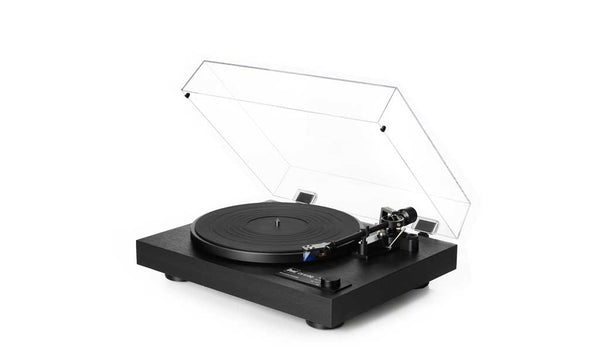
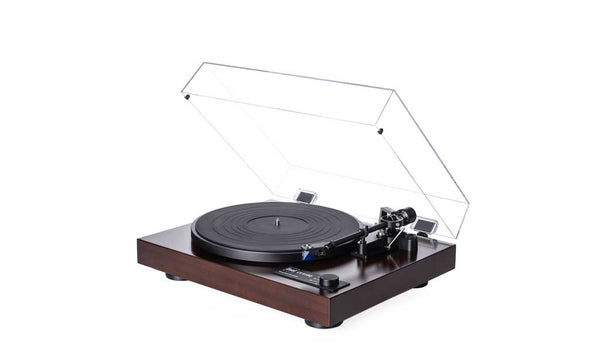
CS-418 Manual Turntable


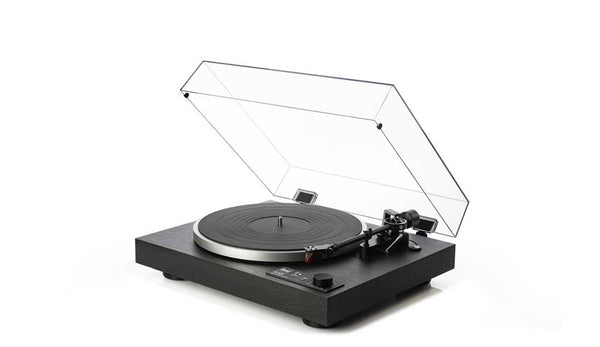
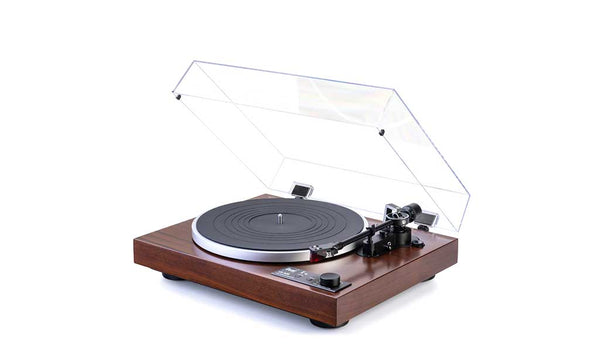
CS-529BT Automatic Turntable


CS-429 Automatic Turntable


CS-518 Manual Turntable